SCOTLAND
SCOTLAND


 The national emblem: the thistle

EDINBURH (the capital)
Edinburgh has been the capital of Scotland since 1999 again. It is the second most populous city of the country. The Scottish capital is an important cultural and scientific centre, as well as the second most important centre of finance after London.
During the 19th century, Edinburgh was called ‘Auld Reekie’ because of the smoke from the steam engines and the pollution of the Industrial Revolution. Another nickname was ‘the Athens of the North’ because of the neoclassical style of some of its buildings and monuments.
The most famous street in Edinburgh is the Royal Mile which leads to Edinburgh Castle.
 Edinburgh Castle was built during the 12th century. It is situated on top of an extinct volcano.
When you visit the castle, you can see the Scottish Crown Jewels, also known as the Honours of Scotland. The crown was made in 1540.

You can also admire the Stone of Destiny which has been used for coronation ceremonies for many centuries. In 1292, the Stone of Destiny was taken from Scotland to Westminster Abbey, in London by King Edward I of England. In 1950, four students took the Stone from Westminster Abbey for return to Scotland. The Stone was found a few months later. In 1996, Queen Elizabeth II allowed the Stone to be returned to Scotland, after 700 years.
 Two other famous attractions at Edinburgh Castle are Mons Meg and the One o’clock Gun.
Mons Meg is one of the oldest cannons in the world. It is over 550 years old.
The One o’clock Gun is fired every day at 1 p.m. In the past,it was a time signal for ships.

GLASGOW
 Today, Glasgow is both an old and modern city, famous for its museums and art galleries. There are over 20 museums and art galleries in Glasgow.

Inverness is the capital of the Highlands and it is also the northernmost city in the United Kingdom. It is situated on the river Ness.

Inverness was founded in the 6th century. The town was a stronghold (= a castle or place that is strongly built and difficult to attack) for the Picts.
FOOD

 Haggis is made from lamb’s offal (lungs, liver and heart) mixed with suet, onions, herbs and spices, all packed into a skin bag traditionally, but not usually now, made of a sheep’s stomach. Haggis is often served with mashed potatoes and mashed swede or turnips. It is traditionally served on Burns’ Night.
THE HIGHLANDS GAMES

Special thanks to Lisa for her oral presentation on Scotland


Special thanks to Carla and Clothilde for their oral presentation on Burns Night



Special thanks to Indian for her oral presentation on her favouirite group U2 (mine too ;-) )


 The national flag of Scotland or Saint Andrew's flag
Special thanks to Carla and Clothilde for their oral presentation on Burns Night
Special thanks to Indian for her oral presentation on her favouirite group U2 (mine too ;-) )
The national flag of Scotland or Saint Andrew's flag
30 November - The national day of Scotland’s is St Andrew's Day . St Andrew is the patron saint of Scotland.
St. Andrew was one of Christ's twelve apostles. Some of his bones are said to have been brought to what is now St. Andrews in Fife during the 4th century.
Since medieval times the X-shaped saltire cross upon which St. Andrew was supposedly crucified has been the Scottish national symbol.

The national emblem and national flower of Scotland is the thistle, a prickly-leaved purple flower which was first used in the 15th century as a symbol of defence.
Scotland is Famous for....
Its fresh water lochs (lakes) – there are over 600 square miles of them. One of the most famous is Loch Ness where a mysterious monster is said to lurk in the depths of the water.
It is also famous for its clans, kilts, medieval castles, as well as poetry and songs ofRobert Burns.
Theatre lovers from around the world come to Edinburgh for its famous theatres festival.
Theatre lovers from around the world come to Edinburgh for its famous theatres festival.
EDINBURH (the capital)
Edinburgh has been the capital of Scotland since 1999 again. It is the second most populous city of the country. The Scottish capital is an important cultural and scientific centre, as well as the second most important centre of finance after London.
During the 19th century, Edinburgh was called ‘Auld Reekie’ because of the smoke from the steam engines and the pollution of the Industrial Revolution. Another nickname was ‘the Athens of the North’ because of the neoclassical style of some of its buildings and monuments.
The most famous street in Edinburgh is the Royal Mile which leads to Edinburgh Castle.
When you visit the castle, you can see the Scottish Crown Jewels, also known as the Honours of Scotland. The crown was made in 1540.

You can also admire the Stone of Destiny which has been used for coronation ceremonies for many centuries. In 1292, the Stone of Destiny was taken from Scotland to Westminster Abbey, in London by King Edward I of England. In 1950, four students took the Stone from Westminster Abbey for return to Scotland. The Stone was found a few months later. In 1996, Queen Elizabeth II allowed the Stone to be returned to Scotland, after 700 years.

Mons Meg is one of the oldest cannons in the world. It is over 550 years old.
The One o’clock Gun is fired every day at 1 p.m. In the past,it was a time signal for ships.

Glasgow is the largest city in Scotland. The name ‘Glasgow’ comes from a Gaelic word which means ‘Dear green place / space’. The bishopric of Glasgow was set up in the 12th century and the University of Glasgow was founded in the 15th century.
 Today, Glasgow is both an old and modern city, famous for its museums and art galleries. There are over 20 museums and art galleries in Glasgow.
The biggest museum is Kelvingrove. It is the most popular UK museum outside London. As for the Burrell Collection, it is the largest private collection of artwork in the world.
Another thing this Scottish city is known for is its architecture. Glasgow’s most famous architect is Charles Rennie Mackintosh, the founder of Art Nouveau.
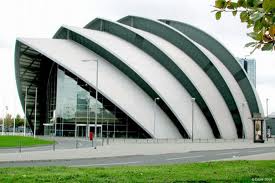
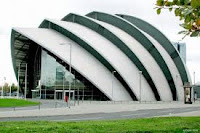
Glasgow has recently started a regeneration programme with the construction of very modern buildings such as the Clyde Auditorium, also known as ‘The Armadillo’, and the Clyde Arc or ‘The Squinty Bridge’.

INVERNESS
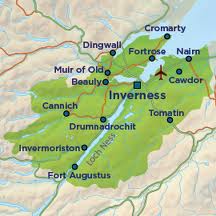
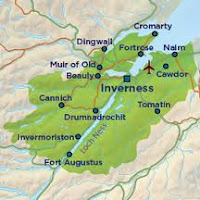
Inverness is the capital of the Highlands and it is also the northernmost city in the United Kingdom. It is situated on the river Ness.
Inverness was founded in the 6th century. The town was a stronghold (= a castle or place that is strongly built and difficult to attack) for the Picts.
There are about 40,000 inhabitants and the city is a major transport hub (= the most important and central part) for the region.
FOOD
The national dish is the HAGGIS ( « panse de brebis farcie »)

Scotland is famous for its game and salmon, the national dish is haggis and neeps (innards and offal chopped up with spices and cooked in a sheep's stomach, served with mashed turnip).
 Haggis is made from lamb’s offal (lungs, liver and heart) mixed with suet, onions, herbs and spices, all packed into a skin bag traditionally, but not usually now, made of a sheep’s stomach. Haggis is often served with mashed potatoes and mashed swede or turnips. It is traditionally served on Burns’ Night.
THE HIGHLANDS GAMES
The Highlands Games celebrate Scottish and Celtic culture and heritage especially those of the Scottish Highlands
1 – What are the origins of these games ?
Th Highlands games have their origins in the Scottish clan system.They are over 300 years old.The clan chief encouraged his men to participate in competitions of physical strengh (=force) and endurance.They proved they were ready for battles against the English !
The Games are a way to commemorate Scottish history.
2 – Where and when do these games take place ?
The games take place throughout (= à travers toute) Scotland between May and September.
The most famous are held (=se déroule) in the late summer at the Bremar Gathering , and the Royal family attends.

The Cowal Highlands festival in Dunoon , every August, is the largest Highland Game in Scotland.It attracts 3,500 competitors and between 15,000and 20,000 spectators.
3 – What do these games consist of ?
The Highland games are a mix of sports,culture and social activities.there is usually a programme of " light events " : athletics , piping and dancing competitions.
And there are typically Scottish" heavy events" : the shot putt , tossing the caber , the tug-o-war and the putting the stone.
 |
| Shot Putt |
 |
| tug-o-war |
 |
| putting the stone |