FESTIVITY: SAINT VALENTINE'S DAY

                                         FESTIVITY: SAINT VALENTINE'S DAY

HAPPY ST VALENTINE'S DAY !!!


 Watch and listen to these two love songs!! 1 -http://www.merpy.com/love/love.html


 QUIZ    

http://www.funtrivia.com/trivia-quiz/World/St-Valentines-Day-Trivia-165669.html


Cupid woke her up  and the couple wed in a ceremony attended by the Gods.

 Cupid was the son of Venus  the goddess of love and beauty.


                          SAINT  VALENTINE'S  DAY                        

                    Who was Saint Valentine ?    


   According to a legend St. Valentine was a priest near Rome in about the year 270 AD  i


  When Claudius II became the emperor he believed that soldiers would be unable to concentrate on fighting if they were married.
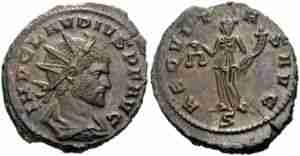


 So he banned marriage.


  Valentine defied the emperor and secretly performed marriage ceremonies.


He was sent to prison until he could be executed.
While he was in the dungeon, Father Valentine learned that the jail-keepers daughter was blind and sent for her. He touched her brow and she was immediately granted her sight. It was a miracle!


When the cruel King Claudius,learned of this miracle, he thought it was witchcraft and immediately ordered that Father Valentine's head be chopped off!


On the morning of the execution, February 14, of the year 270, the priest sent a letter to the jail-keepers daughter, whom he had fallen in love with. He signed the letter "From your Valentine". 


That is why people sign their Valentine's Day cards the way they do today.


As Father Valentine was being buried after the exectution, a huge swarm of red and white butterflies appeared and circled over the people at his funeral. They fluttered here and there, and eventually landed upon Father Valentine's coffin. The people looked at the pattern that the butterflies had made when they landed and saw that it was shaped like a big heart. And that is why  the heart is used as a symbol of love today.


                CUPID                                                                                                  


Psyche was a mortal princess, she was so beautiful that Venus was jealous and ordered Cupid to punish the mortal. But instead, Cupid fell deeply in love with her. After a lot of events Psyche died.

Here is an animated video version on history of Valentine
http://www.youtube.com/watch?v=HGx7q4O6w2w


                                  Valentine's symbols


  Cupid, that boy armed with bow and arrows , has become the most popular of love symbols.
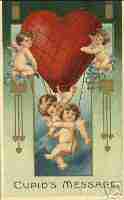


Cards


Other symbols                                                                                                   


  you can send a love letter                     


   offer a gift  


THE NORMANS

Test your knowledge on the Normans:

http://www.funtrivia.com/trivia-quiz/History/The-Norman-Conquest-94537.html

The Middle Ages in Britain cover a huge period : from  the french flag Norman Conquest, which began in 1066, to the devasting Black Death of 1348, the Hundred Years' War with France and the War of the Roses, which finally ended in 1485. 
The Normans built impressive 
castles, imposed a feudal system and carried out a census of the country.
 castle

Who were the Normans?

The Normans were people who lived in Normandy in Northern  France. They were originally Vikings from Scandinavia. (The name Normandy comes from the French normand, meaning Norsemen and Normans)

The Normans lived in wattle and daub huts with thatched straw roofs. 
(After invading Britain they also built castles - to defend their new kingdom


The Normans lived in wattle and daub huts with thatched straw roofs. 
(After invading Britain they also built 
castles - to defend their new kingdom)

                                                   Food

There were no supermarkets or shops to buy food so the celts ate what food they could grow or hunt.
Plants
Vegetables e.g. leeks, onions, turnips, parsnips and carrots.
Wild nuts e.g. hazelnuts and walnuts.
Berries e.g. gooseberries, blackberries and blueberries.
Grains to make bread and also porridge
Herbs e.g. fennel, common sorrel, wild garlic, parsley
Leaves e.g. nettles and spinach
Animal
Wild animals e.g. deer, wild boar, fox, beaver, and bear.
Fish e.g. trout, mackerel, and salmon.
Domesticated animals e.g. chicken, goat, sheep and pigs.
Eggs from hens and wild birds eggs.
Insects
Honey from bees

                  WILLIAM THE CONQUEROR 

William, Duke of Normandy was the leaderof the Normans.William was born in 1027. He became duke of Normandy when he was only seven years old.

Why did William the Conqueror invade England?

William laid claim to the English throne after Edward died. He was a distant cousin of Edward and said that Edward had promised him the throne when visiting France in 1051. He even said his claim had been accepted by Harold Godwinson in 1064, when Harold had been blown onto the Norman shore by a storm. William invaded England to become King and claim the throne from Harold.

When did William the Conqueror invade England?
The Norman Invasion started when William, Duke of Normandy's 7,000 soldiers landed at Pevensey on the morning of the 28th September 1066.

Where did William fight Harold for the English Throne?
Harold and William's armies met on Senlac Hill*, seven miles (10 km) from Hastings.(Today the village where the battle took place is simply called Battle.)


What is the name of the famous battle between William and Harold?

The Battle of Hastings.


What date did the Battle of Hastings take place on?
It began at about nine o'clock on the 14th October 1066 and lasted most of the day.
The battle lasted six hours.
Why did William won the Battle of Hastings?
  1. William's army had time to rest before the battle. Harold Godwinson's army was tired and they did not have time to prepare properly for the battle. The English army had already fought the Battle of Stamford Bridge that day and had to march quickly down to the battlefield outside Hastings. They marched 50 miles a day!
  2. William's army was stronger. He had better trained soldiers and had the use of a strong cavalry (men on horseback) and archers whereas Harold did not.
  3. William's army pretended to flee. Many of Harold's men broke their sheild wall to chase after them but as they did William and his army turned back and slaughtered them.
What is the Bayeux Tapestry about? 
Bayeaux tapestry

The Bayeux Tapestry tells the story, in pictures ,of the events leading up to and including the Battle of Hastings on October 14, 1066. The story is told from the Norman point of view. There is no English equivalent so it is very difficult to confirm or dispute some of the details on the tapestry.


Why is it called the Bayeux Tapestry?
It is called the Bayeux Tapestry because it has been kept at Bayeux in  France probably ever since it was made.Test your knowledge on the Normans:

http://www.funtrivia.com/trivia-quiz/History/The-Norman-Conquest-94537.html

The Middle Ages in Britain cover a huge period : from  the french flag Norman Conquest, which began in 1066, to the devasting Black Death of 1348, the Hundred Years' War with France and the War of the Roses, which finally ended in 1485. 
The Normans built impressive 
castles, imposed a feudal system and carried out a census of the country.
 castle

Who were the Normans?

The Normans were people who lived in Normandy in Northern  France. They were originally Vikings from Scandinavia. (The name Normandy comes from the French normand, meaning Norsemen and Normans)


The Normans lived in wattle and daub huts with thatched straw roofs. 
(After invading Britain they also built castles - to defend their new kingdom)


The Normans lived in wattle and daub huts with thatched straw roofs. 
(After invading Britain they also built 
castles - to defend their new kingdom)

Food

There were no supermarkets or shops to buy food so the celts ate what food they could grow or hunt.
Plants
Vegetables e.g. leeks, onions, turnips, parsnips and carrots.
Wild nuts e.g. hazelnuts and walnuts.
Berries e.g. gooseberries, blackberries and blueberries.
Grains to make bread and also porridge
Herbs e.g. fennel, common sorrel, wild garlic, parsley
Leaves e.g. nettles and spinach
Animal
Wild animals e.g. deer, wild boar, fox, beaver, and bear.
Fish e.g. trout, mackerel, and salmon.
Domesticated animals e.g. chicken, goat, sheep and pigs.
Eggs from hens and wild birds eggs.
Insects
Honey from bees

                  WILLIAM THE CONQUEROR 

William, Duke of Normandy was the leaderof the Normans.William was born in 1027. He became duke of Normandy when he was only seven years old.


Why did William the Conqueror invade England?
William laid claim to the English throne after Edward died. He was a distant cousin of Edward and said that Edward had promised him the throne when visiting France in 1051. He even said his claim had been accepted by Harold Godwinson in 1064, when Harold had been blown onto the Norman shore by a storm. William invaded England to become King and claim the throne from Harold.

When did William the Conqueror invade England?
The Norman Invasion started when William, Duke of Normandy's 7,000 soldiers landed at Pevensey on the morning of the 28th September 1066.

Where did William fight Harold for the English Throne?
Harold and William's armies met on Senlac Hill*, seven miles (10 km) from Hastings.(Today the village where the battle took place is simply called Battle.)


What is the name of the famous battle between William and Harold?

The Battle of Hastings.


What date did the Battle of Hastings take place on?
It began at about nine o'clock on the 14th October 1066 and lasted most of the day.
The battle lasted six hours.
Why did William won the Battle of Hastings?
  1. William's army had time to rest before the battle. Harold Godwinson's army was tired and they did not have time to prepare properly for the battle. The English army had already fought the Battle of Stamford Bridge that day and had to march quickly down to the battlefield outside Hastings. They marched 50 miles a day!
  2. William's army was stronger. He had better trained soldiers and had the use of a strong cavalry (men on horseback) and archers whereas Harold did not.
  3. William's army pretended to flee. Many of Harold's men broke their sheild wall to chase after them but as they did William and his army turned back and slaughtered them.
What is the Bayeux Tapestry about? 
Bayeaux tapestry

The Bayeux Tapestry tells the story, in pictures ,of the events leading up to and including the Battle of Hastings on October 14, 1066. The story is told from the Norman point of view. There is no English equivalent so it is very difficult to confirm or dispute some of the details on the tapestry.


Why is it called the Bayeux Tapestry?
It is called the Bayeux Tapestry because it has been kept at Bayeux in  France probably ever since it was made.v

THE VIKINGS


                          THE VIKINGS

About the year 800, bands of fierce raiders began to attack the English coasts. They were the Vikings. They came across the North Sea, just as the Anglo-Saxons had done 400 years earlier.
In time, like the Anglo-Saxons, they made their home here. They drove the Saxons out of part of the country and took it for themselves.
King Alfred, Saxon king of Wessex, fought them in a great battle, but he could not drive them right away and had to let them have part of the country, called Danelaw. 

      -Where did the Vikings come from?

The Vikings lived over one thousand years ago and came from the three countries of Scandinavia:  Denmark,  Norway and  Sweden.

  -Who were the Vikings?

Vikings were also known as the Norsemen. They were great travellers and sailed to other parts of Europe, where they traded, raided, and often settled
 They were also farmers, fishermen, trappers and traders. Viking craftsmen made beautiful objects out of wood, metal and bone; Viking women were skilful weavers, produced fine, warm textiles.
 
Norsemen means 'people from the North'
 Many Vikings were great travellers and sailed all over Europe and the Atlantic Ocean in their long ships. 

 Viking ship

   -When did they invade Britain?


The Viking Age in Britain began about 1,200 years ago in the 9th Century AD and lasted for 300 years
The Vikings first invaded Britain in AD 793 and last invaded in 1066 when William the Conqueror became King of England after the Battle of Hastings.

The first place the Vikings attacked in Britain was the monastery at Lindisfarne, a holy island situated off the Northumberland coast in the north east of England. A few years later the island of Iona (off the west coast of Scotland), came under attack and its monks were slaughtered.

Soon no region of the British Isles (Britain and nearby islands) was safe from the Vikings. They attacked villages and towns in Wales, Scotland, Ireland, the Isle of Man and England.

No matter how many times the Vikings were beaten, they always came back, and in the end all their efforts paid off.
 It was the Vikings (Norse) of Normandy who finally conquered England in 1066 and changed British history for ever.
   -Why did the Vikings invade Britain?
Most Vikings who sailed overseas were simply searching for better land for their farms. Their land was not very good for farming. Norway was very hilly,  Sweden was covered in forests, and  Denmark had a lot of sandy home land
    -Where did the Vikings settle in Britain?
The area eventually settled by Vikings was called the Danelaw. It formed a boundary separating Anglo-Saxon England from Viking England and was defined in a treaty between the English King Alfred and Viking King Guthrum in AD 880. It lay north of Watling Street, a Roman road running from London north-west to Chester and covered northern and eastern England. It included counties north of an imaginary line running from London to Bedford and then up to Chester. 
The Vikings settled in: 
  • Islands off the coast of Scotland - Shetland, Orkney and The Hebrides
  • Around the north and north west coast of Scotland
  • Parts of Ireland - Dublin is a Viking city
  • The Isle of Man
  • Small parts of Wales
  • Parts of England known as Danelaw
                                 HOUSES
Click to enlargeMost people lived on farms. The Vikings lived in long rectangular houses made with upright timbers (wood), wattle and daub or stone. They were usually one room with a cooking fire in the middle. The smoke escaped through a hole in the roof.
Animals and people lived in the same building. The animals lived in a byre at one end of the house and the people lived at the other.

                 - CLOTHES


Men wore tunics and trousers and women wore a long dress with a pinafore over it. Their clothes were fastened with belts and brooches. They made their clothes from wool and linen.


QUI
 
Test your knowledge on the Vikings : http://www.factmonster.com/quizzes/viking/1.html

The History Channel shows us the Lost World of the Vikings and the advances and technology of the Nordic culture

BRITISH HISTORY: the Anglo -Saxons


                                THE ANGLO - SAXONS

Anglo Saxon Timeline

350 -
Anglo-Saxons raid English shores and are beaten back by the Romans
410
Romans Leave England and England shores are unprotected
449 - 550
Arrival of Jutes from Jutland, Angles from South of Denmark and Saxons from Germany.
450
Saxons, from Germany, settle in Kent.
556
Seven kingdoms are created across Britain
597
St Augustine brings Christianity to Britain from Rome and becomes Archbishop of Canterbury
617
Northumbria becomes the Supreme Kingdom
779
Mercia becomes the Supreme Kingdom and King Offa builds a Dyke along the Welsh Border

The last Roman soldiers left Britain in AD 410, and then new people came in ships across the North Sea. Historians call them Anglo-Saxons.
 The new settlers were a mixture of people from north Germany, Denmark and northern Holland. Most were Saxons, Angles and Jutes.
 If we use the modern names for the countries they came from, the Saxons, were German-Dutch, the Angles were southern Danish, and Jutes were northern Danish.
  

Why did Anglo-Saxons invade Britain?


Historians are not sure why the Anglo-Saxons came to  Britain.
 Some sources say that the Saxon warriors were invited to come, to the area now known as  England, to help keep out invaders from  Scotland and  Ireland. 
Another reason for coming may have been because their land often flooded and it was difficult to grow crops, so they were looking for new places to settle down and farm.

To know more about the Angle- Saxons' way of life :http://www.bbc.co.uk/schools/primaryhistory/anglo_saxons/anglo-saxon_life/

Anglo Saxon Houses

We know what Saxons houses may have looked like from excavations of Anglo Saxon villages, such as the one at West Stow in the east of England. Here, an early Anglo-Saxon village (c.420-650AD) has been carefully reconstructed where it was excavated. Using clues from the what was discovered, archeologists have reconstructed the houses as they may have looked about 1,500 years ago.
We know that the Saxons built mainly in wood, although some of their stone churches remain.
Anglo-Saxons houses were huts made of wood with roofs thatched with straw.
Much of Britain was covered with forests. The Saxons had plenty of wood to use.
There was only one room where everybody ate, cooked, slept and entertained their friends.
The houses were built facing the sun to get as much heat and light as possible.

                                                          THE HALL 

The biggest house in an Anglo Saxon village was the Hall, the Chief's house. He lived there with his warriors.

The Hall was long, wide and smoky, with the fire on a stone in the middle. The smoke from the fire escaped through a hole in the roof.
The windows were slits called eye-holes. There was no glass in the windows.
On the walls were shields and antlers. The floor was dirty and covered with rushes from the river banks. Sometimes the oxen were kept at one end of the Hall.

                                                         FOOD

The Anglo-Saxons loved eating and drinking and would often have feasts in the Hall. The food was cooked over the fire in the middle of the house; meat was roasted and eaten with bread.
They drank ale and mead - a kind of beer made sweet with honey - from great goblets and drinking horns.
After the feast a minstrel would play a harp and sing songs of battles and heroes.
Anglo-Saxons ate what they grew.
They grew
  • cereals - Wheat and rye for bread, barley for brewing and oats for animal food and porridge.
  • vegetables - carrots, parsnip, cabbages, peas, beans and onions.
  • fruit - such as apples, cherries and plums
Exotic foods such as potatoes, tomatoes, bananas, pineapples - fruits and vegetables of the New World, were unknown to the Anglo-Saxons.
Drink
Barley was used to make weak beer, which was drunk instead of water. River water was often polluted. wine was imported from the Mediterranean but only drunk by the very rich.
Most Anglo-Saxons were vegetarians because they could not get meat very often. Wild animals such as deer and wild boar were common but could only be killed by the people who owned the land. Only a few Anglo-Saxons were wealthy enough to pay for a slaughter of an animal.
Animals
Pigs were important for food because they produce large litters, which would quickly mature and be ready for slaughter. They were the only animals reared just for their meat. Every other kind of animal served other purposes and were only killed when they became old or ill. Sheep were reared for their wool and meat. Cows were used for their milk and, when they were old, for hides, meat and glue. All animal fat was valuable for making oils for lamps.
Fish
The Anglo-Saxons ate fish which they caught in the rivers and the seas.


                                                     ENTERTAINMENT (Leisure)

The Anglo-Saxons enjoyed horse racing, hunting, feasting and music-making. 
They played dice and board games such as draughts and chess. Entertainment during feasts included listening to a harp being played and juggling balls and knives.

Children played with balls, hoops and whipping tops (spinning tops). They also played with carved wooden toys such as horses and small wooden boats.

Hoops


whipping top


draughts

Juggling balls

The mound hiding the shipune légende

Sutton Hoo Ship Burial

By about 600, England was divided into small Anglo-Saxon kingdoms each ruled by a king.

Much of what we know about the Anglo-Saxons comes from graves like the one discovered at Sutton Hoo in Suffolk.
Near the River Deben in Suffolk, at Sutton Hoo, are eleven mounds or 'barrows' dating back to the 7th century. In 1939 archaelogists explored the largest mound and discovered a ship buried in the mound.

To revise for your test : do the following quiz (don't forget to do the quiz of each section !!)http://www.bbc.co.uk/schools/primaryhistory/anglo_saxons/who_were_the_anglo-saxons/teachers_resources.shtml