The English speaking world

 How well do you know the English speaking world ?
Click on the following links !  Enjoy!!
 http://michel.barbot.pagesperso-orange.fr/hotpot/geography/gb_uk/match.htm


                                                        THE COMMONWEALTH:


The Commonwealth of Nations, normally referred to as the Commonwealth , is an intergovernmental organisation of 54 independent member states. Most are former British colonies, or dependencies of these colonies.
All members except Mozambique and Rwanda were part of the British Empire, out of which the Commonwealth developed.


The Commonwealth of Nations flag


 THE QUEEN AND THE COMONWEALTH:

She is the Head of the Commonwealth itself, a voluntary association of 54 independent countries.
The Queen is Head of State of 15 Commonwealth realms in addition to the UK. 

                                         THE QUEEN AND THE COMMONWEALTH

The Queen is Sovereign of 15 Commonwealth realms in addition to the UK. She is also Head of the Commonwealth itself.


Find out more about the Commonwealth. 
Click here :http://www.royal.gov.uk/monarchandcommonwealth/overview.aspx


(6 June 2012) The Queen is attending a lunch to mark Her Majesty's Diamond Jubilee given by His Excellency the Rt. Hon. Kamalesh Sharma, the Commonwealth Secretary-General, at Marlborough House in London.

  Special thanks to Marie and Agathe for their oral presentation on the Royal Family!!


Queen Elizabeth II was born on April 21, 1926 in London. Her birthday is officially celebrated in Britain on the 3rd Saturday of June each year.

Queen Elizabeth Il is a 'constitutional monarch'. This means that although she is officially the head of the state, the country is actually run by the government, led by the Prime Minister.

The Queen lives at Buckingham Palace. 
Royal Homes

Among the official royal residences are Buckingham Palace, Windsor Castle, St. James Palace, Balmoral Castle, Frogmore House, The Palace of Holyroodhouse, Sandringham House and Kensington Palace

Queen Elizabeth II ascended the throne on February 6, 1952 upon the death of her father, King George VI. Her Coronation, at Westminster Abbey, followed on June 2, 1953.


The queen celebrated her Golden jubilee (50 years since her accession) in 2002, the Diamond Jubilee in 2012. 

What does she do ?


Head of State

Queen Elizabeth II is the United Kingdom's Head of State. She is queen of 15 former British colonies, including Australia, Canada and New Zealand; and head of the Commonwealth, a multinational body created after the dissolution of the British empire.
 What jobs does the Queen do? 

Head of the Armed Forces
 The Queen is also the Head of the Armed Forces. She is the only person who can declare when the country is at war and when war is over, although she must take advice from her government first.


Head of the Church of England

The Queen is Head of the Church of England - a position that all British monarchs have held since it was founded by Henry VIII in the 1530s.

The Queen appoints archbishops and bishops on the advice of the Prime Minister.
The spiritual leader of the Church of England is the Archbishop of Canterbury
 

Government Duties
Every day 'red boxes' are delivered to the Queen's desk full of documents and reports from the government ministers and Commonwealth officials. They must all be read and, if necessary, signed by the Queen.

Represents the Nation
The Queen represents the nation at times of great celebration or sorrow. One example of this is Remembrance Day ceremony at the Cenotaph monument in Whitehall. The Queen lays a wreath there each year to honour the members of the armed forces who have died fighting for their country.

Get ready for your test ! (Thursday 3rd October): 

QUIZ:    1 - How much do you know about the Commonwealth ? 
 http://www.youngcommonwealth.org/game-1/
    
              2- How much do you know about  Queen Elizabeth II?
http://www.funtrivia.com/quizzes/people/house_of_windsor/elizabeth_ii.html

Why is English important??

It can save lives!!

 
 Vocabulary help !:
Sink = couler   think =penser 
"Mayday" is a distress call. Equivalent to a morse code S.O.S

Back to school!!

          On facebook you mean! :)))  Have a nice school year 2013 /14 !!           Mrs Morel

WALES


                                                                       WALES


Wales is located on the western shores of Great Britain.

It is bounded on the north by the Irish Sea; on the east by England; on the south by the Bristol Channel; and on the west by the St George’s Channel and Cardigan Bay.


The flag of Wales


St David's Flag
This is the flag of St David. It is not the flag of Wales

St. David
1 March - The national day of Wales is St David's Day.
St David is Wales's patron saint.


Who was St David?
St David (Dewi Sant was a Celtic monk, abbot and bishop, who lived in the sixth century. He spread the word of Christianity across Wales.
The most famous story about Saint David tells how he was preaching to a huge crowd and the ground is said to have risen up, so that he was standing on a hill and everyone had a better chance of hearing him.
-Wales has not been politically independent since 1282, when it was conquered by King Edward I of England.
-Until 1999, Wales was ruled directly from London; that year saw the first elections to the National Assembly of Wales, which has limited domestic powers and cannot make law. 
Wales does not issue its own currency and is not in control of any armed forces. These are the powers of the national government of the UK.

 The leek and the daffodil - both emblems of Wales.
They share the Welsh name Ceninen.


The leek is known to have been displayed as a Welsh emblem in 1536 and in Henry V, Shakespeare acknowledged this as an ancient custom. One legend tells of a battle between the Welsh and the Saxons fought in a field of leeks. At some time in the past, the leek was an important part of the diet but it is not commonly eaten today. It is delicious when part of the traditional leek and potato soup.  

The daffodil has no such claim to literary and historical distinction. It has become the more favoured emblem of late, however, since some people find that it makes a more attractive buttonhole on St. David's day . Daffodils and new-born lambs herald the summer in Wales.


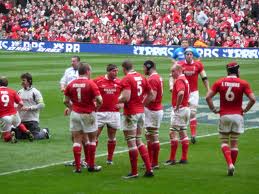
The national game of Wales is Rugby
                                                        Famous people:

Wales is known for its great actors - Richard Burton, and today Sir Anthony Hopkins and Catherine Zeta Jones
It is also known for its Celtic traditions and the Red Dragon (Y Ddraig Goch) on its flag.

  • Laura Ashley - famous fashion creator.
  • David Lloyd George - past British Prime Minister,
  • Sir George Everest - famous traveler and explorer, The highest peak in the world is named after him.
Writers and poets

  • Roald Dahl (1916–1990), author
  • Dick Francis (born 1920), jockey and author
  • Dylan Thomas (1914–1953), poet
  • Ronald Stuart Thomas (1913–2000), poet
  • David Jones (1895–1974), artist and poet
Musicians

  • Tom Jones
  • Shirley Bassey.
Musical groups:

  • Catatonia,
  • Super Furry Animals,
  • The Stereophonics,
  • Manic Street Preachers.

Traditional Welsh Food

  • Welsh food is usually made from local ingredients.
  • Some traditional dishes include laverbread (made from seaweed), bara brith (fruit cake), cawl cennin (leek stew), Welsh cakes, Welsh Rarebit, and Welsh lamb.
  • A type of shellfish, cockles, is often served with breakfast
Laverbread
Welsh cakes
                                                          
                                                                                  QUIZ

1 - http://www.visitwales.co.uk/upload/pdf/quiz.PDF

2 - http://quiztimeuk.blogsome.com/2009/02/28/wales-quiz/

SCOTLAND

                                                              SCOTLAND


 The national  flag of Scotland or  Saint Andrew's flag
 30 November - The national day of Scotland’s is St Andrew's Day . St Andrew is the patron saint of Scotland.
  St. Andrew was one of Christ's twelve apostles. Some of his bones are said to have been brought to what is now St. Andrews in Fife during the 4th century. 
Since medieval times the X-shaped saltire cross upon which St. Andrew was supposedly crucified has been the Scottish national symbol.

 The national emblem: the thistle
 The national emblem and national flower of Scotland is the thistle, a prickly-leaved purple flower which was first used in the 15th century as a symbol of defence.


Scotland is Famous for.... 
Its fresh water lochs (lakes) – there are over 600 square miles of them. One of the most famous is Loch Ness where a mysterious monster is said to lurk in the depths of the water.
It is also famous for its clans, kilts, medieval castles, as well as poetry and songs of Robert Burns.
Theatre lovers from around the world come to Edinburgh for its famous theatres festival.


EDINBURH (the capital)
Edinburgh has been the capital of Scotland since 1999 again. It is the second most populous city of the country. The Scottish capital is an important cultural and scientific centre, as well as the second most important centre of finance after London.
During the 19th century, Edinburgh was called ‘Auld Reekie’ because of the smoke from the steam engines and the pollution of the Industrial Revolution. Another nickname was ‘the Athens of the North’ because of the neoclassical style of some of its buildings and monuments.
The most famous street in Edinburgh is the Royal Mile which leads to Edinburgh Castle. 


 Edinburgh Castle was built during the 12th century. It is situated on top of an extinct volcano.


When you visit the castle, you can see the Scottish Crown Jewels, also known as the Honours of Scotland. The crown was made in 1540. 


You can also admire the Stone of Destiny which has been used for coronation ceremonies for many centuries. In 1292, the Stone of Destiny was taken from Scotland to Westminster Abbey, in London by King Edward I of England. In 1950, four students took the Stone from Westminster Abbey for return to Scotland. The Stone was found a few months later. In 1996, Queen Elizabeth II allowed the Stone to be returned to Scotland, after 700 years.


Two other famous attractions at Edinburgh Castle are Mons Meg and the One o’clock Gun
Mons Meg is one of the oldest cannons in the world. It is over 550 years old. 
The One o’clock Gun is fired every day at 1 p.m. In the past,it was a time signal for ships.


 GLASGOW

Glasgow is the largest city in Scotland. The name ‘Glasgow’ comes from a Gaelic word which means ‘Dear green place / space’. The bishopric of Glasgow was set up in the 12th century and the University of Glasgow was founded in the 15th century.
Today, Glasgow is both an old and modern city, famous for its museums and art galleries. There are over 20 museums and art galleries in Glasgow.
 The biggest museum is Kelvingrove. It is the most popular UK museum outside London.  As for the Burrell Collection, it is the largest private collection of artwork in the world.
Another thing this Scottish city is known for is its architecture. Glasgow’s most famous architect is Charles Rennie Mackintosh, the founder of Art Nouveau.
 
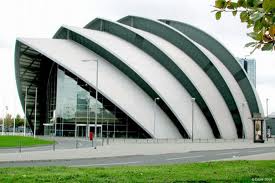
Glasgow has recently started a regeneration programme with the construction of very modern buildings such as the Clyde Auditorium, also known as ‘The Armadillo’, and the Clyde Arc or ‘The Squinty Bridge’.

INVERNESS


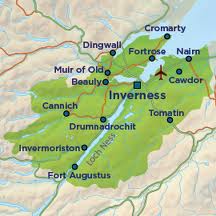
Inverness is the capital of the Highlands and it is also the northernmost city in the United Kingdom. It is situated on the river Ness.

Inverness was founded in the 6th century. The town was a stronghold (= a castle or place that is strongly built and difficult to attack) for the Picts.
There are about 40,000 inhabitants and the city is a major transport hub (= the most important and central part) for the region.


FOOD
The national dish is the HAGGIS ( « panse de brebis farcie »)
Scotland is famous for its game and salmon, the national dish is haggis and neeps (innards and offal chopped up with spices and cooked in a sheep's stomach, served with mashed turnip).
Haggis is made from lamb’s offal (lungs, liver and heart) mixed with suet, onions, herbs and spices, all packed into a skin bag traditionally, but not usually now, made of a sheep’s stomach. Haggis is often served with mashed potatoes and mashed swede or turnips. It is traditionally served on Burns’ Night.


  THE HIGHLANDS GAMES
The Highlands Games celebrate Scottish and Celtic culture and heritage especially those of the Scottish Highlands
1 – What are the origins of these games ?
Th Highlands games have their origins in the Scottish clan system.They are over 300 years old.The clan chief encouraged his men to participate in competitions of physical strengh (=force) and endurance.They proved they were ready for battles against the English !
The Games are a way to commemorate Scottish history.
2 Where and when do these games take place ?
 
The games take place throughout (= à travers toute) Scotland between May and September.

The most famous are held (=se déroule) in the late summer at the Bremar Gathering , and the Royal family attends.
The Cowal Highlands festival in Dunoon , every August, is the largest Highland Game in Scotland.It attracts 3,500 competitors and between 15,000and 20,000 spectators.
3 – What do these games consist of ?
The Highland games are a mix of sports,culture  and social activities.there is usually a programme of " light events " : athletics , piping and dancing competitions.
And there are typically Scottish" heavy events" : the shot putt , tossing the caber , the tug-o-war and the putting the stone.

Shot Putt


tug-o-war


putting the stone

IRELAND


 Special thanks to Jodie for her oral presentation on Ireland:


Test your knowledge about Ireland


Take a virtual voyage through Ireland's most amazing sites by clicking:
 http://www.timeforkids.com/destination/ireland/sightseeing

                                                         IRISH FOOD
                                                              
National Dishes

 Ireland is famous for its seafood with smoked salmon, smoked fish, oysters, mussels and
crab topping the bill. The country also produces excellent lamb, beef pork, black pudding,
farmhouse cheese, soda bread and, of course, Guinness and maybe a drop of whiskey!


Irish stew, "ballymaloe" or "stobhach gaelach" as it is called in Gaelic,is a traditional dish made from lamb or mutton as well as potatoes,onions, and parsley. It is a filling, flavourful dish made with the cheapest, most readily-available ingredients. The Irish raised primarily
sheep and root crops for subsistence. The sheep provided wool for warm clothing, milk for drinking and making cheese, and eventuallyfood. Potatoes were the main food crop, prior to the potato famine.


Colcannon is a traditional Irish food made from mashed potatoes, cabbage (or kale), butter, salt, and pepper. It can contain other ingredients such as milk, cream, leeks, onions, chives or garlic. It is a cheap, year-round staple food. 
An Irish Halloween tradition is to serve colcannon with prizes of small coins concealed in it.


Traditional Irish Breakfast - This is one of the glories of the Irish table and can include grilled bacon, black pudding (= boudin noir)and good quality sausages, tomatoes grilled with butter and chives, flat mushrooms and soda and potato bread. Nowadays, with the more hectic lifestyle, it is confined to weekend treats and holidays - not to be missed, it sets you up for the day!


FAMOUS IRISH PEOPLE


James  Joyce (2 February 1882 – 13 January 1941) was an Irish novelist and poet, considered to be one of the most influential writers in the modernist avant-garde of the early 20th century;Joyce is best known for Ulysses (1922)

Oscar Wilde:
This famous Irish personality was one of the most successful writers ever. Oscar Wilde's - The Picture of Dorian Gray, was amongst his most renowned works.


mrobinson.jpg (3387 bytes) 

  Mary Robinson was elected to office in 1990---a milestone event in Irish society---not only was she the first woman president of Ireland, she was, at the time, one of only three female heads of state in the world. She resigned the presidency on Sept. 12, 1997, 11 weeks short of her full 7 year term, to accept the position of United Nations High Commissioner for Human Rights.

Paul David Hewson (Bono):Paul David Hewson, better known as Bono of the U2 group was born in Dublin in Ireland. The Irish band U2 has many smash hits to their credit. Bono is also the creative head behind the lyrics of the songs. Bono is also known for his controversial lyrics as well. 
This talented artist also has numerous awards to his credit. He has also tried his hand at acting. Bono is also engaged in extensive humanitarian work.


Pierce Brendan Brosnan (born 16 May 1953) is an Irish actor, film producer and environmentalist.
After Remington Steele, Brosnan appeared in films such as The Fourth Protocol and Mrs. Doubtfire. In 1995, he became the fifth actor to portray secret agent James Bond in the Eon Productions film series, starring in four films between 1995 and 2002. He also provided his voice and likeness to Bond in the 2004 video game James Bond 007: Everything or Nothing. During this period, he also took the lead in other films such as Dante's Peak and the remake of The Thomas Crown Affair. After leaving the role of Bond, he has starred in such successes as The Matador (nominated for a Golden Globe, 2005), Mamma Mia (2008), and The Ghost Writer (2010